- Time Period: January 1, 2018 through December 31, 2022
- Location: California residents only — you must have been a California resident at the time of your Tinder subscription
- Product/Service: Tinder Gold or Tinder Plus paid subscriptions
- Age Requirement: You must have been age 29 or older at the time of your subscription (users who paid the higher age-based pricing tier)
- Purchase Requirement: You must have paid for a Tinder Gold or Tinder Plus subscription during the eligible period — free Tinder accounts do not qualify
- Exclusions: Match Group, Inc. employees, officers, directors, and their immediate family members; the presiding judge and court staff; anyone who previously opted out of this class action
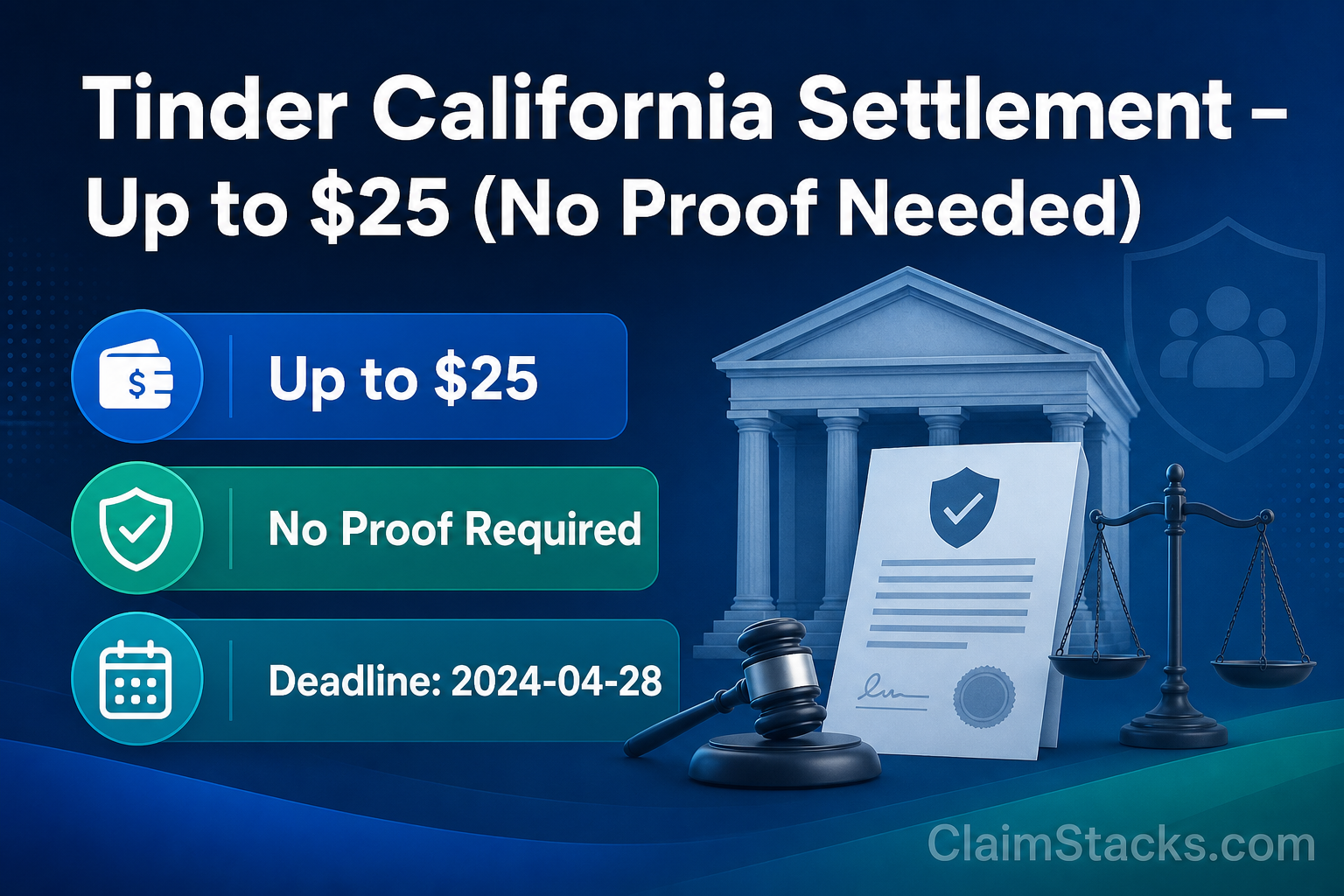
Match Group agreed to a $23 million settlement over alleged age-based pricing discrimination on Tinder. California subscribers may claim up to $25 with no proof of purchase required.
Tinder California Settlement – Up to $25 (No Proof Needed)
Tinder California class action settlement pays eligible subscribers up to $25. No proof of purchase required. File your claim before the deadline at tindercalclassaction.com.
Settlement Features
No Proof Required
Easy Claim
2025 Settlement
Cash Payment
Subscription
Overcharge
Quick Claim
Settlement Overview
About This Settlement
If you subscribed to Tinder Gold or Tinder Plus in California between January 1, 2018 and December 31, 2022, you may be entitled to a cash payment from a class action settlement. Match Group, Inc., the parent company of Tinder, has agreed to settle allegations that it charged older California users higher subscription prices than younger users — a practice plaintiffs argued violated California's Unruh Civil Rights Act. The total settlement fund is $23 million, and eligible claimants can receive up to $25 per claim with no proof of purchase required.
Background & Lawsuit Details
The lawsuit, filed in California state court, alleged that Tinder engaged in age-based price discrimination by charging users aged 30 and older significantly more for Tinder Gold and Tinder Plus subscriptions than users under 30. Plaintiffs argued this violated the California Unruh Civil Rights Act, which prohibits businesses from discriminating against customers based on characteristics including age. Match Group denied any wrongdoing but agreed to settle the case to avoid the cost and uncertainty of continued litigation. The case drew national attention as one of the first major legal challenges to age-based dynamic pricing in the subscription app industry.
Settlement Terms & Payout
Match Group has agreed to establish a $23 million settlement fund to resolve the claims. Eligible class members who submit a valid claim form may receive a cash payment of up to $25. The exact amount each claimant receives may vary depending on the total number of valid claims submitted. Payments will be distributed via check or electronic payment methods. Attorneys' fees, administrative costs, and any service awards to the named plaintiffs will be deducted from the total fund before distribution to class members.
Who Should File
You are eligible to file a claim if you meet all of the following criteria:
- You subscribed to Tinder Gold or Tinder Plus
- You were a California resident at the time of your subscription
- You subscribed at any point between January 1, 2018 and December 31, 2022
- You were age 29 or older when you subscribed (and therefore paid a higher age-based price)
You do not need to still be a Tinder subscriber to qualify. Former subscribers are fully eligible.
Why File Now
The claim filing deadline is approaching, and this is a straightforward, no-proof-required claim that takes only a few minutes to complete online. With a $23 million fund and potentially millions of eligible California Tinder users, the per-claimant payout could decrease as more people file — so filing early is in your best interest. The process is entirely online, free to participate, and requires no documentation. Don't leave money on the table.
Frequently Asked Questions
Q: How much money can I get from the Tinder California settlement?
A: Eligible claimants can receive up to $25 per claim. The exact amount depends on the total number of valid claims submitted. If fewer people file, individual payouts could be higher; if more people file, the amount may be proportionally reduced from the $23 million fund.
Q: Do I need proof of purchase to file a Tinder settlement claim?
A: No proof of purchase is required. You do not need to provide receipts, bank statements, or any documentation of your Tinder subscription. You simply need to certify under penalty of perjury that you meet the eligibility criteria.
Q: When is the deadline to file a Tinder California settlement claim?
A: The claim filing deadline is April 28, 2024. Claims submitted after this date will not be accepted. File as soon as possible at tindercalclassaction.com.
Q: How long will it take to receive my Tinder settlement payment?
A: Payments are typically distributed after the court grants final approval of the settlement and any appeals period has passed. This process generally takes several months to over a year after the claim deadline. You will be notified when payments are being processed.
Q: Who is excluded from the Tinder California settlement?
A: Excluded from the settlement are Match Group employees, officers, directors, and their immediate family members, as well as the judge presiding over the case and their staff. Anyone who previously opted out of the class is also excluded.
Who Is Eligible?
How to File a Claim
Estimated time: 3–5 minutes
- Step 1: Visit the official claim website at https://www.tindercalclassaction.com. Tip: Bookmark this page so you can return if needed.
- Step 2: Click the 'File a Claim' button on the homepage to access the online claim form.
- Step 3: Enter your personal information, including your name, current mailing address, and the email address associated with your Tinder account during the eligible period.
- Step 4: Confirm your eligibility by certifying that you were a California resident who subscribed to Tinder Gold or Tinder Plus between January 1, 2018 and December 31, 2022, and that you were age 29 or older at the time.
- Step 5: Select your preferred payment method (check or electronic payment) and submit your completed claim form.
- Step 6: Save or screenshot your confirmation number for your records. You may receive a confirmation email as well.
Alternative — File by Mail: You can also download a paper claim form from the settlement website and mail it to: Tinder California Class Action Settlement, c/o Angeion Group, 1650 Arch Street, Suite 2210, Philadelphia, PA 19103. Your mailed claim must be postmarked by the claim deadline.
Documentation Requirements
✅ No Proof of Purchase Required
You do NOT need a receipt, bank statement, proof of purchase, or any documentation to file a claim. Simply complete the online claim form and certify under penalty of perjury that you meet the eligibility requirements. Your word is sufficient.
Payout Details
Individual Payout Range: Up to $25 per claimant
Total Settlement Fund: $23 Million
Payment Method: Check or electronic payment (options available on the claim form)
Expected Payment Timeline: Payments will be distributed after final court approval of the settlement and the expiration of any appeals period — typically several months to over a year after the claim deadline
What Affects Your Payout: The final per-claimant amount depends on the total number of valid claims submitted. Attorneys' fees (up to 25% of the fund), administrative costs, and named plaintiff service awards will be deducted from the $23 million fund before distribution to class members
Key Information
Payout Range
$5 - $25
Claim Deadline
August 18, 2026
69 days left
Total Settlement Fund
$23 Million
Settlement Administrator Contact
Name: Angeion Group
Address: Tinder California Class Action Settlement, c/o Angeion Group, 1650 Arch Street, Suite 2210, Philadelphia, PA 19103
Email: [email protected]
Phone: 1-888-492-5212
By clicking "Submit Claim Now", you will be directed to the official settlement website to file your claim directly with the settlement administrator.